Mude para português Change to English Cambiar a español
Gestão de Clínicas 2026 – Módulo 2 – Colégio Brasileiro de Radiologia e Diagnóstico por Imagem (CBR) Skip to main content

Clinic Management 2026 – Module 2

R$2.400,00

GENERAL INFORMATION

*DISCOUNT NOT CUMULATIVE*

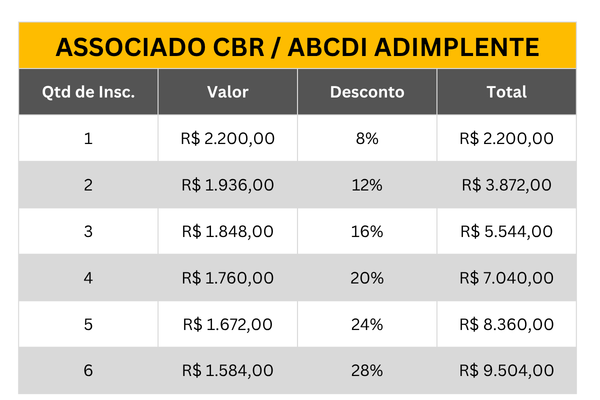
R$ 2,200.00 – Value for CBR/ABCDI Member in good standing

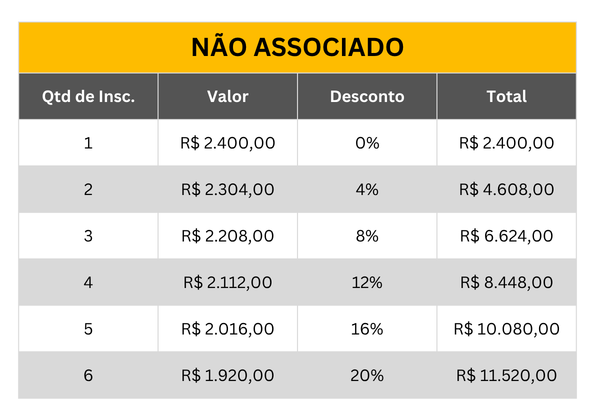
R$ 2,400.00 – Amount for Non-CBR/ABCDI Members

Special condition for multiple registrations.
Ask us how!

In person at the CBR headquarters – São Paulo – SP

29 Vagas disponíveis

WhatsApp

Posso ajudar?

Description

In-person - 30 spots per class - 12-hour course

OBJECTIVE

The supplemental healthcare market has unique characteristics. Adopting management systems or models from other industries has proven to be a less fruitful approach. Our segment has many peculiarities that strongly impact operations and results.

The regulations are specific and constantly changing. Health insurance companies impose work methods that directly impact our productivity and control, and demand that changes be implemented immediately.

In this module, we will present a Corporate Management Model that meets the needs of our sector and proposes practical and effective implementation solutions for clinics of any size.

PROGRAM CONTENT

  • Developing a Strategic Management Model;
  •  Differences between Planning and Management;
  •  Management methods;
  •  Challenges in Implementing the Plan;
  •  Some Key Objectives of Strategic Planning;
  •  How to Develop a Strategic Plan? ;
  •  Some Strategic Planning Tools;
  •  Business Model Canvas;
  •  Empathy Map;
  •  SWOT Matrix;
  •  Pestal Analysis;
  •  BCG Matrix;
  •  Porter's Five Forces;
  •  Ansoff Matrix;
  • Eisenhower Matrix;
  • Balanced Scorecard;
  • SMART;
  • 5W+2H;
  • OKR;
  • Suggested Strategic Planning Tools;
  • Introduction to Strategic Planning;
  • Strategic Planning Tool – Mission, Vision and Values;
  • Current Scenario of the Brazilian Healthcare Market;
  • SWOT analysis;
  • Profitability Matrix;
  • Porter's Five Forces; • What are our Strategic Objectives – OKR (Objectives and Key Results);
  • Increased Revenue from Higher Margin Service Lines;
  • Increasing the Clinic's Profitability;
  • Innovating Processes and Technologies to Increase Productivity;
  • Effective Commercial Management with Clients;
  • Effective Corporate Management Model
  • Results, Tactics and Project Meetings;
  • Key Success Indicators (KPIs);
  • Key Processes in Radiology and Diagnostic Imaging Clinics;
  • Structuring a New Corporate Management Model;
  • Meeting Results – Strategic Decisions – Strategic Indicators;
  • Performance Meetings – Performance Analysis – Tactical Indicators;
  • Projects for Revenue Increase, Automation and/or Cost Reduction;
  • Step 1 – Defining Macroprocesses and Processes;
  • Step 2 – Defining Area Leaders and Process Leaders;
  • Step 3 – Defining the Visions We Need to Manage;
  • 3rd Stage – ProJet Business Intelligence;
  • Step 4 – Defining Strategic, Tactical, and Operational Indicators;
  • Step 5 – Define Goals, Calculation Method, and Determination Method;
  • Step 6 – Defining the Agenda for Strategic and Tactical Meetings;
  • Step 7 – Create a Folder Structure for Agendas, Minutes, and Action Plans;
  • 8th Stage – Initiate the Cycle of Strategic and Tactical Meetings;
  • Step 9 – Follow-up on Meeting Items.
  • Phased Implementation of the New Corporate Management Model;
  • 1st Wave – Performance Meeting of the Scheduling Process and its Indicators
  • % of Exams Cancelled by the Patient and the Clinic Not Rescheduled (Weekly – Tactical – Non-PADI);
  • % of Missed Exams (Weekly – Strategic – Non-PADI);
  • % of Recovered Exams (Weekly – Strategic – Non-PADI);
  • Average Waiting Time (AWT) for Scheduling (Monthly – Strategic – Non-PADI);
  • Average Handling Time (AHT) for Scheduling (Monthly – Strategic – Non-PADI);
  • % of Incoming and Abandoned Calls (Monthly – Strategic – Non-PADI);
  • % Service Level Agreement (SLA) (Monthly – Strategic – Non-PADI);
  • Incoming Call Productivity per Agent per Hour (Monthly – Strategic – Non-PADI);
  • Social Media Average Handling Time (Monthly – Strategic – Non-PADI);
  • % of Exams Scheduled via Social Media (Monthly – Strategic – Non-PADI);
  • 2nd Wave – Meeting on the Performance of the Customer Service Process and its Indicators;
  • 3rd Wave – Performance Meeting of the Accounts Receivable Process and its Indicators;
  • Application and Scope of the LGPD;
  • Definitions Established by the LGPD Regarding Data;
  • Types of Sensitive Personal Data Covered by the LGPD;
  • Consent Without the Need for Authorization in Accordance with LGPD (Art. 7º);
  • Definitions Established by the LGPD Regarding Agents;
  • Definitions Established by the LGPD Regarding Data Processing;
  • Data Processing Principles in the LGPD (Article 6);
  • Rights of Personal Data Holders (Art. 18);
  • Definitions Established by the LGPD Regarding Data Location;
  • National Data Protection Authority – ANPD;
  • Data Protection Officer – DPO;
  • Penalties foreseen in the LGPD (Brazilian General Data Protection Law) according to the considerations;
  • Action Plan for Adapting the Clinic to the LGPD (Brazilian General Data Protection Law).
  • What is NPS (Net Promoter Score)?;
  • Grade Classification;
  • Research Highlights;
  • Cross-analysis;
  • Continuous Improvement Cycle;
  • Search Results;
  • Interpretation of the Result;
  • Critical Zone;
  • Improvement Zone;
  • Quality Zone;
  • Zone of Excellence;
  • Opportunity to Identify Detractors and Turn Them into Promoters;
  • Large Companies Worldwide That Use NPS;
  • Possible Collection Channels.
  • Opportunity to Reduce Costs and Increase Productivity;
  • Potential Gains from a Shared Services Center; 
  • Essential Contract Between the Parties with Clear Rules for Cost Sharing;
  • Consolidation of the Federal Revenue Service's Understanding;
  • Economic Group – Concepts and Characterization;
  • Economic Group – Accounting Aspect;
  • Economic Group – Corporate Aspect;
  • Economic Group – Labor Aspects;
  • Economic Group – Corporate Structure Aspect;
  • Economic Group – Types of Structures;
  • Economic Group – CLT (Consolidation of Labor Laws) Employee Working for Group Companies.

SPEAKERS

Carlos Moura

He is a Business Administrator with an MBA in IT from USP and an International Human Talent Development Course from the University of Central Florida. With extensive knowledge of the Brazilian diagnostic medicine market, he is an Economic Advisor to the Brazilian College of Radiology and Diagnostic Imaging (CBR), which he represents as a member of the Supplementary Health Information Standardization Committee (COPISS) and the Sector Quality Assessment Technical Committee (COTAQ). He is a partner in Moura Assessoria, a management consultancy in the field of diagnostic medicine. Over the last fifteen years, he has held executive positions in the administrative, commercial and financial areas in the diagnostic medicine segment, among others.

Rodolfo Siqueira

Graduated in Business Administration with emphasis in Information Technology, he has over 12 years of experience in the Brazilian supplementary health market. He held leadership positions in the areas of Market Intelligence, Controllership, Receivables, Commercial and Imaging Diagnostic Management at the fourth largest Diagnostic Medicine company in the world (DASA). He is currently the Manager of Management Consulting for Imaging Diagnostic Clinics, with automation projects, revenue increase and cost reduction, ensuring great results for clients and management training in the health segment.

WhatsApp

Posso ajudar?